
Loading...
Loading...
We use cookies to keep this site running smoothly. See our privacy policy for details.
Businesses evaluating offshore back-office support often compare the Philippines and India as the two main options. This page compares the two options for growing businesses building back-office teams.
Both are credible. The better choice depends on the work, the team size and the operating model.

The table below covers the main factors.
| Factor | Philippines | India |
|---|---|---|
| Timezone | GMT+8, night-shift coverage standard | IST is GMT+5:30, which is 2.5 hours behind GMT+8. |
| English proficiency | English is the primary business language | Strong but more variable by region |
| Cultural alignment with Western business | High, familiar with Western and Asian business practices | Strong but different communication norms |
| Back-office and admin roles | Very strong, deep BPO talent pool | Strong but more IT-focused |
| IT and technical roles | Moderate | Very strong |
| Small team suitability | Well suited for teams of 2 to 20 | Better suited for larger enterprise engagements |
| Office infrastructure | Mature BPO office market in Cebu and Manila | More enterprise-focused |
| Staff retention for back-office | Generally strong for office-based roles | Variable depending on location and role |
For most back-office work, the Philippines has clear day-to-day advantages.
The Philippine BPO industry has built a deep back-office talent pool over more than 30 years. Accountants, bookkeepers, admin assistants, HR coordinators, data entry teams and CRM coordinators are all well-represented in the market at the experience levels growing businesses need.
Cultural familiarity with both Western and Asian business communication styles makes Philippines professionals well-suited to client-facing and communication-heavy roles. Written and spoken English is consistent, which removes a common friction point in day-to-day work.
Philippines providers are more accustomed to working with growing businesses building teams of 2 to 20. Many India-based providers are structured for enterprise-scale engagements with minimum team sizes and complexity that do not suit smaller businesses.
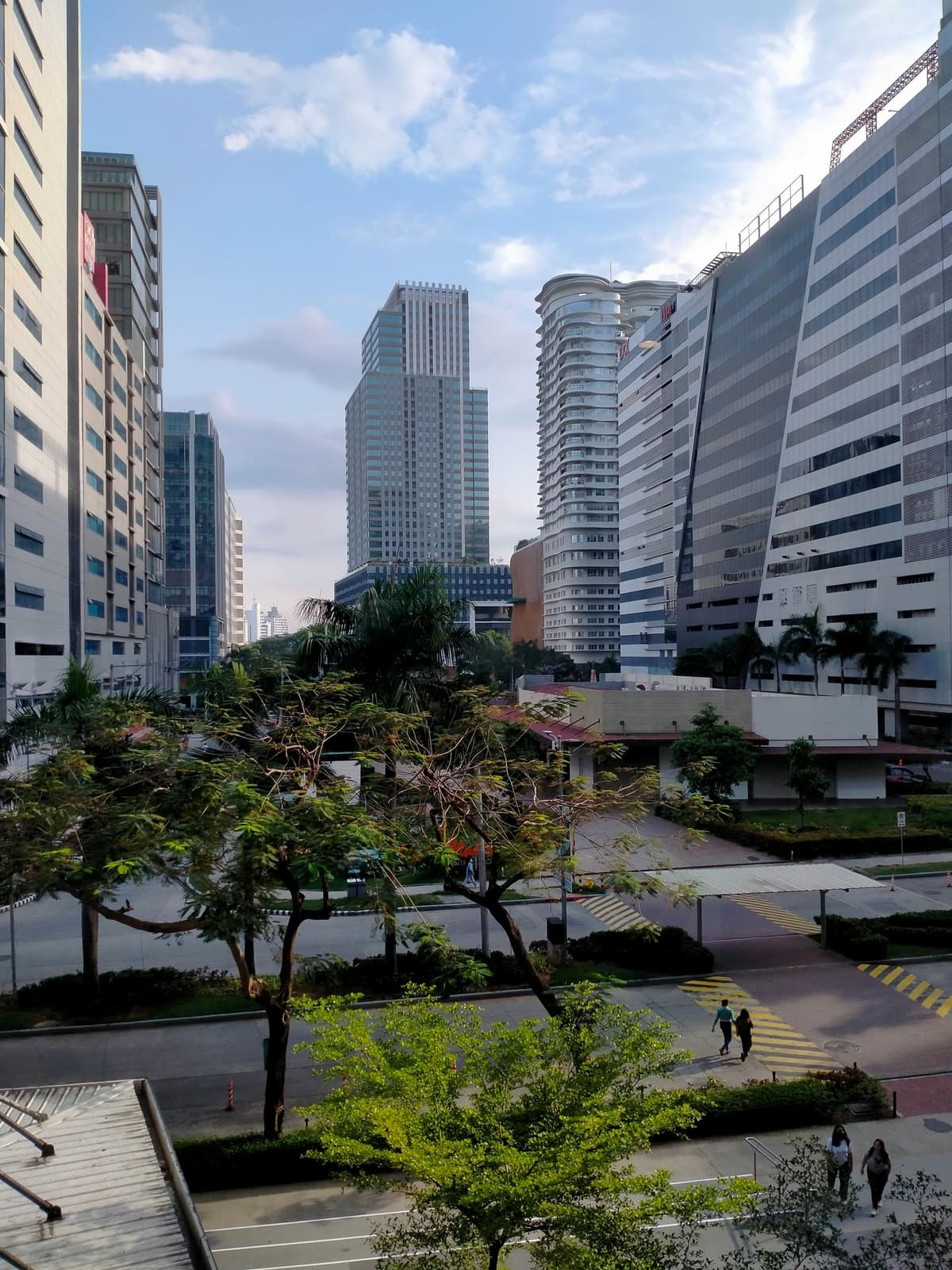
Cebu IT Park is a PEZA-registered business district with modern managed office buildings, reliable enterprise internet and power infrastructure, and an established talent pool. The office-based delivery infrastructure required for controlled data handling is mature and accessible for SME-scale engagements.
India is a credible offshore destination. For some work, it is the better choice.
India has a significantly deeper technical talent pool than the Philippines. For businesses with software development, IT infrastructure or engineering requirements, India offers scale and depth that the Philippines cannot match.
Large teams with complex technical requirements are better served by the Indian BPO market, which has decades of experience with enterprise-scale engagements.
India has strong chartered accountancy depth and a large pool of financial analysts. For high-level finance functions at enterprise scale, India has more options than the Philippines.
India can win on salary-only comparisons. The Philippines often wins on total operating cost for back-office work.
India is not the wrong choice for global businesses. It is often the right choice for specific use cases. The question is whether your work fits the destination.
Timezone alignment matters more than many buyers expect. It affects daily handoffs and response times.
The Philippines runs on GMT+8, giving Australian businesses same-day overlap and US businesses reliable night-shift coverage. India sits on IST (GMT+5:30), further from these hours, so handoffs are needed more often. Time-sensitive tasks can often be done the same day.
2.5 hours behind GMT+8. India sits further from the working hours of Asia Pacific and US clients than the Philippines, which reduces the natural overlap and makes end-of-day handoffs more necessary for time-sensitive work. The Philippine BPO industry is built around shift work for international clients.
The practical impact for growing businesses
If the offshore team works as part of daily operations, timezone fit matters. For businesses that need their offshore team to act like an extension of the home office, the Philippines shift model helps.
Cost comparisons between the Philippines and India often focus on headline salary. The total operational cost tells a different story.
As a concrete comparison, an experienced offshore accountant in the Philippines earns approximately PHP 45,000 to PHP 65,000 per month (USD 780 to USD 1,130). An equivalent role in India in a metro BPO centre earns approximately INR 35,000 to INR 55,000 per month (USD 420 to USD 660). The Philippines can win on total cost because the model is all-inclusive and easier to manage.
India can offer lower base salaries for some roles at entry level. But salary is not the only cost. Timezone coordination, communication management, quality review cycles and management time all have a cost that does not appear on a salary comparison spreadsheet.
A 2.5-hour timezone gap often needs more active management. Handoff processes, delayed feedback loops and reduced real-time collaboration all consume home-side management time. For growing businesses where managers and founders are the ones directing the offshore team, this overhead directly reduces the value of the cost saving.
A supervised, office-based team usually gives more consistent output than a home-based arrangement, in any country. The delivery model affects quality and reliability in ways that raw salary comparisons do not capture.
For growing businesses, the right cost comparison is not which country has the lowest salary for a given role. It is which arrangement delivers the required output at the lowest total operating cost including management time, rework, quality management and communication overhead.
For businesses handling financial data, client records or any personal data, the delivery model matters as much as the destination. Office-based delivery with controlled infrastructure is available in both countries but is the primary differentiator within the Philippines market for small-team engagements.
PEZA-registered business district with modern managed office buildings, redundant fibre internet, generator backup and established physical security infrastructure. The managed office setup suits small and mid-size teams.
The Plus Back Office model uses company-owned hardware in a managed office. No personal devices, no home broadband, no uncontrolled access. This controls framework supports compliant data handling regardless of what data flows through the team.
Physical security controls (biometric office access and CCTV coverage) are part of the standard Cebu IT Park operating environment. These controls are relevant for businesses that need to document physical security as part of their data protection assessment.
The minimum engagement of 2 staff and the office model are designed for growing businesses rather than enterprise outsourcing programmes. This is a structural advantage of the Philippines BPO market for smaller businesses.
For back-office work, the Philippines is usually the better fit. For software and enterprise technical work, India often is.
This Philippines vs India outsourcing recommendation covers the most common scenarios.
Back-office work, admin, customer support, finance support, data entry, CRM:
Philippines is usually the stronger choice for growing businesses.
GMT+8 shift coverage, English as primary business language, deep talent pool in these roles and small-team engagement models make the Philippines the practical recommendation for most back-office requirements.
Software development, IT infrastructure or enterprise-scale technical functions:
India may be more suitable.
For businesses with significant IT outsourcing requirements, India offers depth and scale in technical talent that the Philippines cannot match at a comparable cost.
Teams of 2 to 20 wanting supervised, office-based delivery at GMT+8:
Cebu IT Park, Philippines is the practical recommendation.
For small and mid-size back-office teams, the Philippines, delivered from a managed office in Cebu IT Park, is usually the stronger fit.
Admin, finance support, customer support, data entry, CRM.
Software development, IT infrastructure, enterprise-scale analytics.
For English-heavy back-office work including admin, finance support, customer support, data entry and CRM, the Philippines is usually the stronger choice for growing businesses. GMT+8 shift coverage and English as the primary business language are the key advantages. India is better for software development, IT services and enterprise-scale technical functions.
The Philippines operates on GMT+8. Australian Eastern Time businesses get a 2 to 3 hour morning overlap and full afternoon coverage. Australian Western Time businesses share the same timezone. US businesses run their offshore team on a night shift, which is a well-established working pattern in the Philippines. India is further from these working hours, so handoffs are needed more often for time-sensitive work. For integrated back-office teams, reliable timezone coverage translates to real operational efficiency.
India can offer lower headline salaries for some roles at entry level. However total operational cost including timezone coordination, communication overhead and quality review often narrows the gap. The right comparison is total operating cost, not the seat cost alone.
English is the primary business language in the Philippines, producing consistent communication quality. Cultural familiarity with both Western and Asian business practices also reduces friction in cross-cultural communication. For communication-heavy roles, this matters in practice.
Software development, IT infrastructure, engineering and enterprise-scale technical BPO. India has significantly deeper technical talent depth than the Philippines for these categories. Also consider India for high-level finance and analytics functions at enterprise scale.
Country-level comparisons can mislead because the delivery model matters as much as geography. An office-based team in Cebu IT Park on company-managed desktops in a supervised environment will outperform a home-based team anywhere. The operating model, not just the country, is what determines day-to-day output quality and data security.
Book a discovery call. We will scope your roles, walk you through the Cebu IT Park model and give you a clear all-in monthly cost for your specific requirements.